
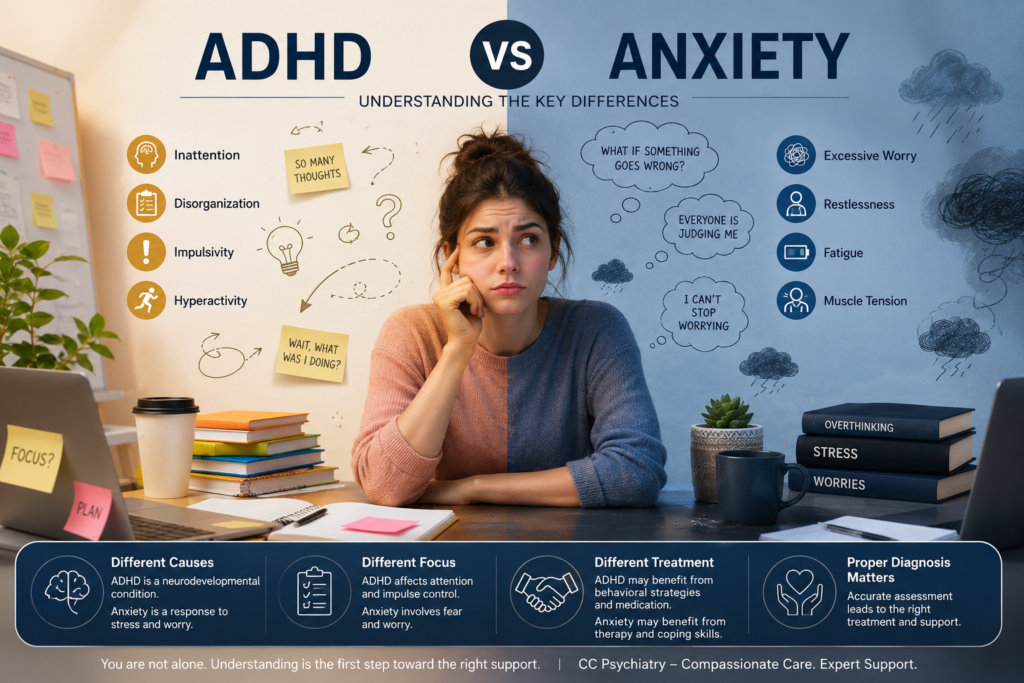
Many people struggle with difficulty concentrating, restlessness, forgetfulness, and feeling overwhelmed. Because these symptoms can occur in both Attention-Deficit/Hyperactivity Disorder (ADHD) and anxiety disorders, it is often difficult to tell them apart.
While ADHD and anxiety can look similar on the surface, they are two distinct conditions that require different approaches to diagnosis and treatment. Understanding the differences can help individuals seek the right support and improve their quality of life.
What Is ADHD?
Attention-Deficit/Hyperactivity Disorder (ADHD) is a neurodevelopmental condition that affects attention, impulse control, and executive functioning.
ADHD commonly begins in childhood but often continues into adulthood.
Common symptoms of ADHD include:
- Difficulty maintaining focus
- Frequent forgetfulness
- Poor organization
- Impulsivity
- Restlessness
- Trouble completing tasks
- Difficulty managing time
People with ADHD may know what they need to do but struggle to stay focused long enough to complete it.
What Is Anxiety?
Anxiety is a mental health condition characterized by excessive worry, fear, or nervousness that interferes with daily functioning.
Occasional anxiety is normal, but persistent anxiety can affect relationships, work performance, sleep, and overall well-being.
Common symptoms include:
- Excessive worrying
- Racing thoughts
- Muscle tension
- Difficulty sleeping
- Irritability
- Panic attacks
- Avoidance of stressful situations
Unlike ADHD, anxiety is primarily driven by fear and worry about future events or perceived threats.
Similar Symptoms Between ADHD and Anxiety
Because both conditions affect concentration and emotional regulation, they often appear similar.
Shared symptoms may include:
Difficulty Concentrating
Individuals with ADHD may lose focus because their attention constantly shifts.
Individuals with anxiety may struggle to concentrate because their minds are occupied by worries and intrusive thoughts.
Restlessness
Both conditions can create a feeling of being unable to sit still or relax.
Sleep Problems
Difficulty falling asleep or staying asleep is common in both ADHD and anxiety disorders.
Emotional Dysregulation
People with either condition may experience frustration, irritability, or emotional overwhelm.
These overlapping symptoms often lead to confusion and delayed diagnosis.
Key Differences Between ADHD and Anxiety
Although they share certain characteristics, important differences exist.
Source of Attention Problems
ADHD:
Attention difficulties occur because the brain struggles with focus and executive functioning.
Anxiety:
Attention problems occur because worry consumes mental energy and attention.
Thought Patterns
ADHD:
Thoughts may jump rapidly from one topic to another.
Anxiety:
Thoughts are usually centered around fears, concerns, or worst-case scenarios.
Task Avoidance
ADHD:
Tasks may be avoided because they feel boring or difficult to organize.
Anxiety:
Tasks may be avoided because they create fear or worry.
Timing of Symptoms
ADHD:
Symptoms are generally lifelong and often begin during childhood.
Anxiety:
Symptoms may develop at any stage of life and can fluctuate depending on stress levels.
Can Someone Have Both ADHD and Anxiety?
Yes.
Research shows that ADHD and anxiety frequently occur together. Many individuals diagnosed with ADHD also experience anxiety disorders.
In some cases, untreated ADHD can create chronic stress that eventually contributes to anxiety.
For example:
- Missing deadlines
- Forgetting responsibilities
- Struggling academically
- Experiencing workplace challenges
These ongoing difficulties can increase anxiety over time.
When both conditions exist together, treatment should address each condition appropriately.
How ADHD and Anxiety Are Diagnosed
Diagnosis requires a comprehensive evaluation by a qualified mental health professional.
The assessment may include:
- Medical history review
- Symptom questionnaires
- Clinical interviews
- Behavioral observations
- Family history assessment
Because ADHD and anxiety symptoms overlap, professional evaluation is important to ensure an accurate diagnosis.
Self-diagnosis based solely on online information can be misleading.
Treatment Options for ADHD
Treatment plans vary depending on the individual’s needs.
Common approaches include:
Medication
Certain medications can improve attention, focus, and impulse control.
Behavioral Therapy
Therapy helps individuals develop organizational skills, time-management strategies, and coping techniques.
Lifestyle Changes
Healthy habits can significantly improve symptoms:
- Regular exercise
- Consistent sleep schedule
- Structured routines
- Balanced nutrition
Treatment Options for Anxiety
Anxiety treatment often includes:
Cognitive Behavioral Therapy (CBT)
CBT helps individuals identify and challenge negative thought patterns.
Medication
Certain medications may reduce excessive worry and physical symptoms of anxiety.
Stress Management Techniques
Helpful strategies include:
- Mindfulness
- Deep breathing exercises
- Meditation
- Physical activity
When Should You Seek Professional Help?
You should consider seeking professional support if symptoms:
- Interfere with work or school
- Affect relationships
- Cause emotional distress
- Impact sleep and daily functioning
- Continue for several months
Early intervention can improve outcomes and help individuals develop effective coping strategies.
Final Thoughts
ADHD and anxiety share many symptoms, which can make them difficult to distinguish. However, understanding the root cause of concentration problems, restlessness, and emotional challenges can help identify the correct condition.
Whether symptoms are caused by ADHD, anxiety, or a combination of both, professional evaluation is the best way to receive an accurate diagnosis and personalized treatment plan.
Seeking help is an important step toward improved mental health, better productivity, and a higher quality of life.