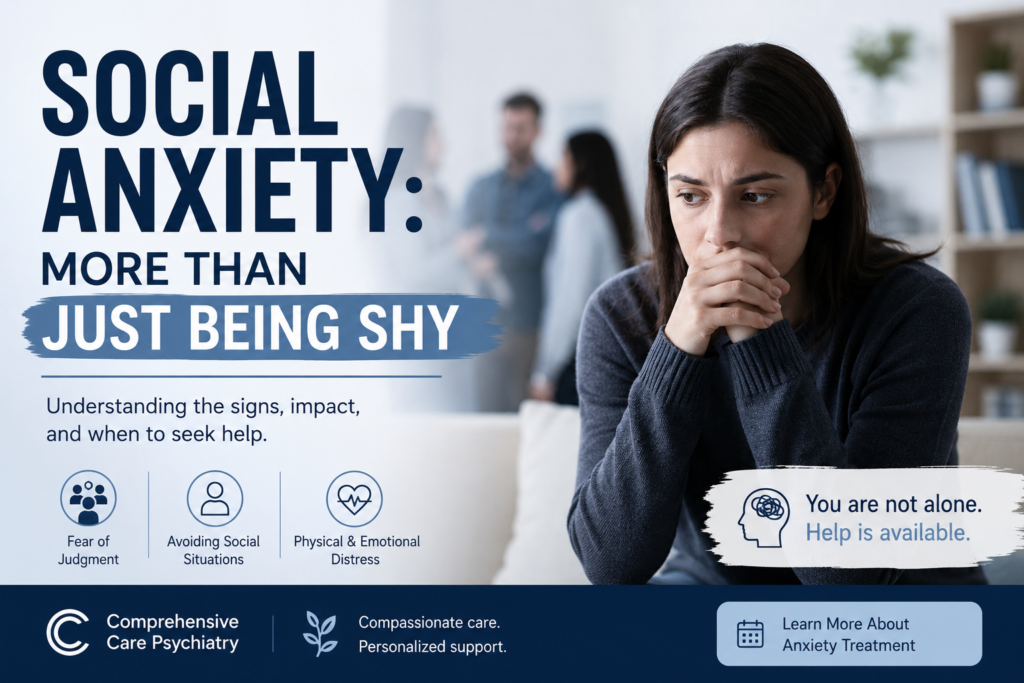
Social Anxiety: More Than Just Being Shy
Many people feel nervous before speaking in public, meeting someone new, or walking into a crowded room. Feeling shy or uncomfortable in certain social situations is a normal part of life. But for some people, the fear of social situations goes far beyond occasional nervousness. The anxiety can become so intense that it affects work, school, relationships, and everyday activities. This may be a sign of social anxiety disorder, a type of anxiety disorder that involves a persistent fear of being judged, embarrassed, or negatively evaluated by others. Understanding the difference between shyness and social anxiety can be an important first step toward getting the right support. What Is Social Anxiety? Social anxiety involves an intense fear of social or performance situations where a person believes they may be watched, judged, criticized, or embarrassed. Someone with social anxiety may worry for days or even weeks before an upcoming event. They may replay conversations afterward, wondering whether they said something wrong or made a bad impression. The anxiety is not simply about preferring to be alone. Many people with social anxiety want to connect with others but feel held back by overwhelming fear and self-consciousness. Social Anxiety vs. Being Shy Shyness and social anxiety can look similar from the outside, but they are not the same thing. A shy person may initially feel uncomfortable around new people but can gradually become more relaxed. Social anxiety, on the other hand, can involve intense fear that causes someone to avoid situations or endure them with significant distress. For example, a shy person may feel nervous before attending a party but still enjoy the experience once they arrive. Someone with social anxiety may avoid the party entirely because of persistent worries about being judged, saying the wrong thing, or embarrassing themselves. The key difference is often the intensity of the fear and how much it interferes with daily life. Common Signs of Social Anxiety Social anxiety can affect people in different ways. Some common signs include: Intense fear of being judged or criticized Worrying excessively before social events Avoiding conversations, meetings, parties, or public places Difficulty speaking in groups or meeting new people Fear of being embarrassed or humiliated Replaying conversations and overanalyzing what was said Avoiding eye contact because of discomfort Physical symptoms such as sweating, shaking, nausea, or a racing heart Feeling extremely self-conscious around others These symptoms can make everyday situations feel much more difficult than they appear to others. The Hidden Impact of Social Anxiety Social anxiety is often easy to overlook because a person may appear quiet, reserved, or simply introverted. However, behind that quiet behavior, there may be a constant cycle of worry and fear. Someone may avoid speaking up at work even when they have valuable ideas. They may decline invitations, struggle to make new friends, or avoid opportunities because they fear being judged. Over time, this avoidance can affect career growth, education, relationships, and overall quality of life. When Worry Becomes More Than Everyday Stress Everyone experiences worry from time to time. However, anxiety can become more concerning when it feels persistent, difficult to control, and begins interfering with everyday responsibilities or relationships. Social anxiety may also exist alongside other forms of anxiety. Understanding how anxiety can go beyond ordinary stress is important when symptoms begin affecting daily life. For more insight, read our related article, Living with Anxiety: When Worry Becomes More Than Just Stress, which explores when ongoing worry may be a sign that additional support is needed. Social Anxiety, Anxiety, and Stress: Understanding the Difference Stress and anxiety are often used interchangeably, but they are not always the same. Stress is typically connected to an identifiable challenge or pressure, such as work deadlines, financial concerns, or family responsibilities. Anxiety can persist even when there is no immediate threat and may continue to affect a person’s thoughts, emotions, and physical well-being. For a closer look at these differences, read Anxiety vs. Stress: Understanding the Difference. Understanding what may be contributing to your symptoms can help you take a more informed step toward finding support. Why Social Anxiety Often Leads to Avoidance Avoidance can provide temporary relief from anxiety. If a person avoids a presentation, social gathering, or difficult conversation, they may immediately feel less anxious. However, over time, avoidance can make social anxiety stronger. The person may begin avoiding more situations because they never have the opportunity to learn that they may be able to manage the discomfort. This can gradually create a cycle in which fear leads to avoidance, and avoidance reinforces the fear. When Should You Seek Help for Social Anxiety? It may be time to seek professional support if anxiety is: Preventing you from participating in important activities Affecting your work, education, or relationships Causing you to regularly avoid social situations Creating persistent worry before or after interactions Causing significant physical or emotional distress Making you feel isolated from others You do not have to wait until anxiety becomes overwhelming to seek help. Anxiety Disorders Treatment and Support A professional evaluation can help determine whether your symptoms may be related to social anxiety or another anxiety disorder. At Comprehensive Care Psychiatry, Anxiety Disorders treatment can help patients better understand their symptoms and explore treatment options based on their individual needs. The right approach can vary from person to person, which is why a personalized evaluation is an important part of understanding and addressing anxiety. Social Anxiety Does Not Define You Living with social anxiety can make it feel as though fear is controlling important parts of your life. You may want to speak up, meet new people, attend events, or pursue opportunities but feel held back by persistent worry. Recognizing that social anxiety is more than simply being shy can be an important first step. With professional support and an appropriate treatment plan, it may be possible to better understand your symptoms, manage anxiety, and feel more comfortable participating in the situations that matter to you. Frequently Asked Questions About
Social Anxiety: More Than Just Being Shy Read More »