
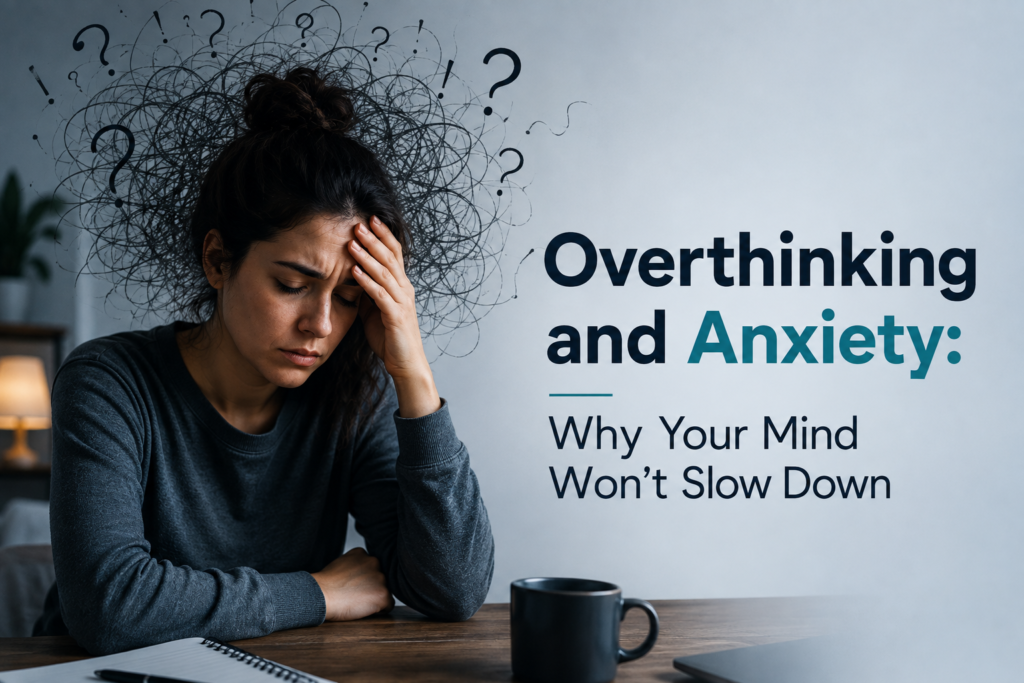
When Thinking Too Much Starts Affecting Your Daily Life
Everyone overthinks from time to time. You may replay a conversation, worry about something that could happen, or spend hours trying to make the “right” decision. However, when overthinking becomes constant, it can leave you feeling mentally exhausted and make it difficult to focus on everyday life.
For many people, frequent overthinking may be connected to anxiety. Sometimes, it can be difficult to tell whether you are experiencing everyday stress or something more persistent. Our article, Anxiety vs. Stress: Understanding the Difference and Knowing When to Seek Help, can help you better understand the distinction.
Understanding the difference between occasional worry and persistent anxious thinking can be an important first step toward finding the right support.
What Does Anxiety-Related Overthinking Feel Like?
Overthinking often involves repeatedly analyzing situations without reaching a solution. Your mind may jump from one possibility to another, often focusing on what could go wrong.
Common experiences may include:
- Replaying past conversations or mistakes
- Constantly imagining worst-case scenarios
- Difficulty making decisions
- Seeking reassurance from others repeatedly
- Trouble falling asleep because your mind feels active
- Feeling mentally tired but unable to “switch off”
Occasional worry is a normal part of life. However, when these thoughts become persistent and difficult to control, they may begin affecting your work, relationships, sleep, and overall well-being.
Persistent worry can affect many aspects of daily life. You can also learn more in our blog, Living with Anxiety: When Worry Becomes More Than Just Stress.
Why Does Anxiety Cause So Much Overthinking?
Anxiety can make the mind feel as though it needs to stay alert for potential problems. As a result, you may continuously search for risks, mistakes, or possible negative outcomes.
You might find yourself asking:
- What if something goes wrong?
- What if I made the wrong decision?
- What if people think negatively about me?
- What if I am not prepared?
The problem is that excessive thinking does not always lead to better solutions. In many cases, repeatedly analyzing the same situation can increase feelings of stress and leave you feeling even more overwhelmed.
When persistent worry, fear, or anxiety begins interfering with daily life, learning more about Anxiety Disorders and available treatment options may be a helpful next step.
The Connection Between Overthinking and Physical Symptoms
Anxiety does not only affect your thoughts. Persistent worry can also affect the body.
Some people may experience:
- Difficulty sleeping
- Muscle tension
- Restlessness
- Fatigue
- Difficulty concentrating
- Feeling constantly “on edge”
When your mind is continuously focused on potential problems, it can become difficult for both your mind and body to relax.
Over time, ongoing stress and anxiety may affect your work, relationships, and overall quality of life. This is one reason why understanding the difference between stress and anxiety can be helpful.
How Overthinking Can Create a Cycle of Anxiety
Overthinking and anxiety can sometimes create a difficult cycle.
A person may worry about a situation and begin analyzing every possible outcome. Instead of feeling reassured, they may discover even more things to worry about. This can lead to additional anxiety, which then creates even more overthinking.
The cycle may look like this:
A stressful thought → Overanalyzing the situation → Increased worry → More negative possibilities → Even more anxiety
Breaking this cycle may involve learning healthier ways to respond to anxious thoughts rather than trying to find a perfect answer to every possible situation.
When Should You Seek Professional Support?
It may be helpful to speak with a mental health professional if overthinking or anxiety is interfering with your ability to:
- Sleep properly
- Concentrate at work or school
- Maintain relationships
- Make everyday decisions
- Participate in activities you normally enjoy
Persistent anxiety can affect everyone differently, which is why a professional evaluation can help provide a clearer understanding of what you may be experiencing.
Complete Care Psychiatry provides support for individuals experiencing symptoms related to anxiety. You can learn more about the practice’s Anxiety Disorders services and discuss appropriate treatment options with a qualified professional.
Take the First Step Toward Managing Persistent Anxiety
You cannot always control every thought that enters your mind. However, persistent overthinking does not have to control every part of your life.
If your mind constantly feels busy, overwhelmed, or focused on potential problems, seeking professional support may help you better understand your symptoms and explore available treatment options.
For additional information, you can explore Complete Care Psychiatry’s existing resources on anxiety and stress as well as the Anxiety Disorders service. The site currently lists these anxiety-related blogs and services.